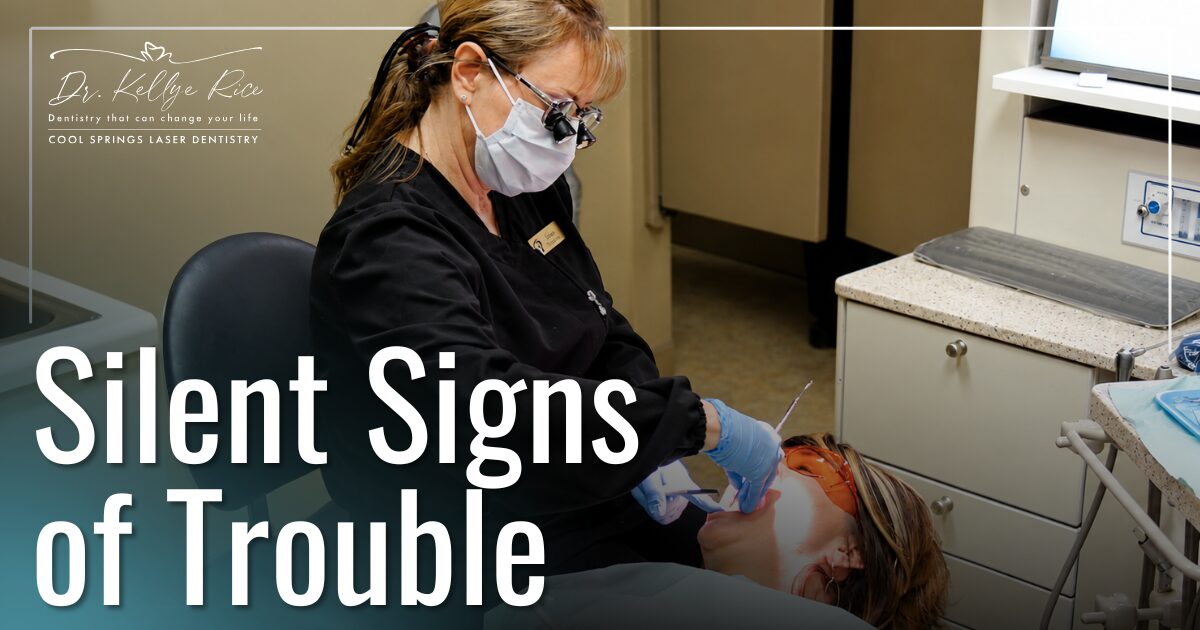
One of the most common questions I hear from patients is some version of this:
“If I have a problem, wouldn’t I feel it?”
It’s a fair question. After all, most of us are used to our bodies giving us some kind of warning when something is wrong. If you sprain your ankle, it hurts. If you have a headache, you feel it. If you’re running a fever, your body lets you know.
Unfortunately, dental problems don’t always work that way.
In fact, some of the most common issues we see in dentistry can develop quietly for months or even years before causing any noticeable symptoms. That’s one of the reasons regular dental visits remain so important, even when everything seems to feel perfectly normal.
Take cavities, for example. Most people assume a cavity will immediately cause pain, but that isn’t always the case. A cavity often begins as a small area of decay within the enamel, the hard outer layer of the tooth. During those early stages, many patients don’t feel anything at all. By the time sensitivity or discomfort develops, the cavity may have already progressed much deeper into the tooth.
The same is true for gum disease.
Early gum disease often presents with subtle signs that are easy to overlook, such as mild bleeding when brushing or slight inflammation around the gums. Because there is usually little to no pain, many patients don’t realize there is an issue until more significant damage has occurred. Left untreated, gum disease can eventually affect the bone and structures that support your teeth.
Cracks in teeth can also be surprisingly difficult to detect without a professional examination. Some cracks are so small that they may not cause symptoms right away. Over time, however, those cracks can worsen and lead to discomfort, infection, or even tooth loss if they are not identified and treated.
Beyond your teeth and gums, routine dental visits allow us to evaluate other aspects of your oral health. During your examination, we’re looking for signs of oral cancer, infection, changes in soft tissue, bite issues, and other concerns that may not be visible or noticeable to you at home.
One of the most rewarding conversations I have with patients is when we identify a concern early, before it becomes painful or requires more extensive treatment. Early detection often means simpler treatment, lower costs, and better long-term outcomes.
That doesn’t mean every visit results in finding a problem. In fact, many appointments end with reassurance that everything looks healthy. Those are my favorite visits.
But the peace of mind that comes from knowing your oral health is in good shape is valuable in itself.
So if your teeth feel fine, that’s wonderful. I hope they do.
Just remember that feeling fine and being healthy are not always the same thing when it comes to your smile. Regular examinations allow us to confirm that everything is healthy, catch potential issues early, and help you maintain your oral health for years to come.
If it has been a while since your last dental visit, we’d love to help you get back on track. Sometimes the best appointment is the one that confirms there’s nothing to worry about.